
Diwali, or Deepavali, the “festival of lights,” is a celebration that illuminates not just homes and streets, but the very spirit of hope, prosperity, and the timeless triumph of good over evil. Spanning five glorious days, this Hindu festival is observed with immense joy across India and by the Indian diaspora globally, each light a testament to profound spiritual and mythological narratives. More than just a dazzling display of lamps and fireworks, Diwali is a collective reaffirmation of faith, family, and the enduring power of righteousness.
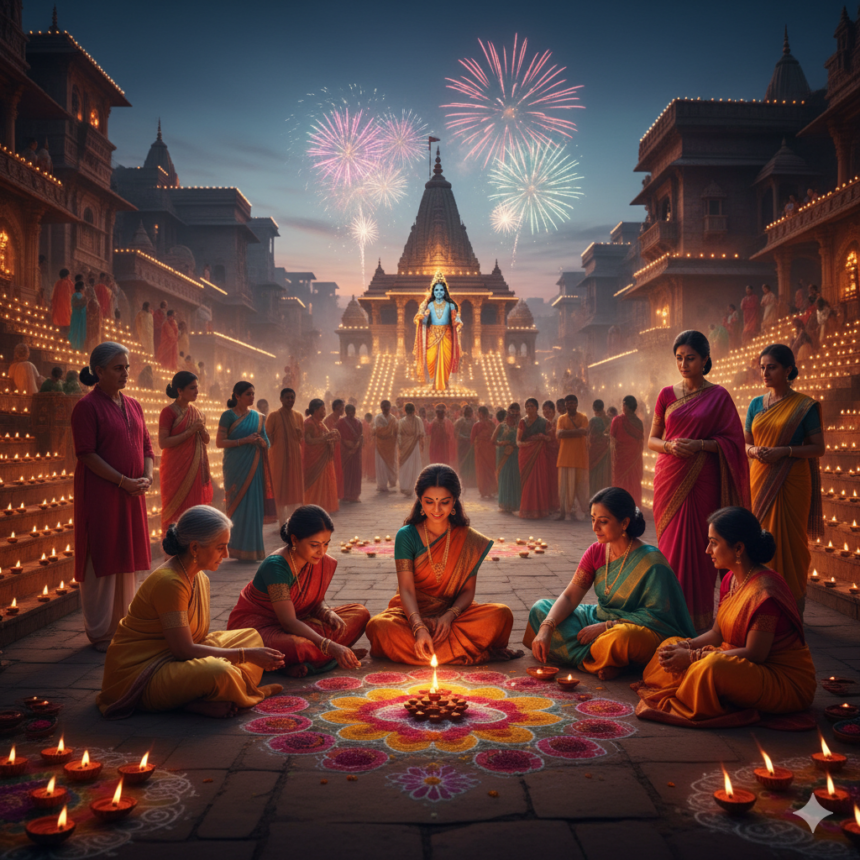
At its core, Diwali is a monumental commemoration of the victory of light (Dharma) over darkness (Adharma). The most universally celebrated narrative, particularly in North India, is the epic homecoming of Lord Rama to Ayodhya. After a grueling fourteen-year exile and a victorious battle against the demon king Ravana, Rama, his wife Sita, and his brother Lakshmana returned on a moonless night. The people of Ayodhya, overwhelmed with joy, lit thousands of earthen lamps, or diyas, to light their king’s path home. This jubilant, glowing welcome is the foundational act of Diwali, symbolizing the restoration of order, justice, and the victory of virtue.
However, the festival’s significance is a rich tapestry woven with multiple legends, reflecting the diverse cultural and spiritual landscape of the Indian subcontinent.
The main day of Diwali coincides with the darkest night of the Hindu lunar month of Kartik (Amavasya) and is primarily dedicated to the worship of Goddess Lakshmi. As the goddess of wealth, prosperity, and fortune, Lakshmi is invited into clean, brightly-lit homes, which are meticulously decorated with intricate rangoli patterns. The ritual of Lakshmi Puja involves seeking her blessings for financial well-being and abundance in the coming year, underscoring the spiritual significance of material and moral prosperity. She is often worshipped alongside Lord Ganesha, the remover of obstacles and the god of wisdoIn other regions, different tales take precedence, but all share the central theme of triumph. In South India, Diwali often commemorates Lord Krishna’s victory over the demon Narakasura, an oppressive king who had enslaved thousands. Krishna’s defeat of the demon, marked on the day preceding the main Diwali (known as Naraka Chaturdashi or Choti Diwali), is celebrated as the end of tyranny and the liberation of the people. In Eastern India, particularly Bengal, the festival aligns with the worship of Goddess Kali, the fierce form of the Divine Mother, who vanquished the monstrous forces of evil, symbolizing the destruction of negativity.
Beyond Hinduism, Diwali holds unique significance for other faiths. Jains observe the day as the anniversary of Lord Mahavira’s attainment of moksha (final liberation), illuminating lamps to mark the light of his holy knowledge. Sikhs celebrate it as Bandi Chhor Divas, commemorating the day in 1619 when the Sixth Guru, Guru Hargobind, was released from a Mughal prison and arrived at the Golden Temple in Amritsar, which was subsequently illuminated in celebration.
The five-day festival is a holistic celebration of life’s key aspects:
- Dhanteras (Day 1): Worshipping wealth (Dhan) and purchasing gold or utensils, symbolizing the accumulation of prosperity.
- Naraka Chaturdashi/Choti Diwali (Day 2): Celebrating the removal of evil and cleansing of the spirit, often with ritual baths.
- Lakshmi Puja/Main Diwali (Day 3): The main day of light, worship, and celebration, affirming the spiritual victory and seeking blessings for the new year.
- Govardhan Puja (Day 4): Commemorating Lord Krishna’s act of lifting the Govardhan Hill to protect his people, symbolizing devotion and faith.
- Bhai Dooj (Day 5): Celebrating the sacred bond between brothers and sisters, with sisters praying for their brothers’ longevity and well-being.
Ultimately, to celebrate Diwali is to embrace the inner light—the belief that knowledge will conquer ignorance, kindness will triumph over malice, and hope will overcome despair. It is a time for deep house cleaning, settling debts, mending relationships, wearing new clothes, sharing mithai (sweets), exchanging gifts, and gathering with family. The millions of flickering diyas are not merely decorations; they are small, powerful reminders that even on the darkest night, light can be found, and goodness, in the end, will always prevail. Diwali, the great festival of lights, is a luminous celebration of the best in humanity.