
- 0Shares
- 7 Views
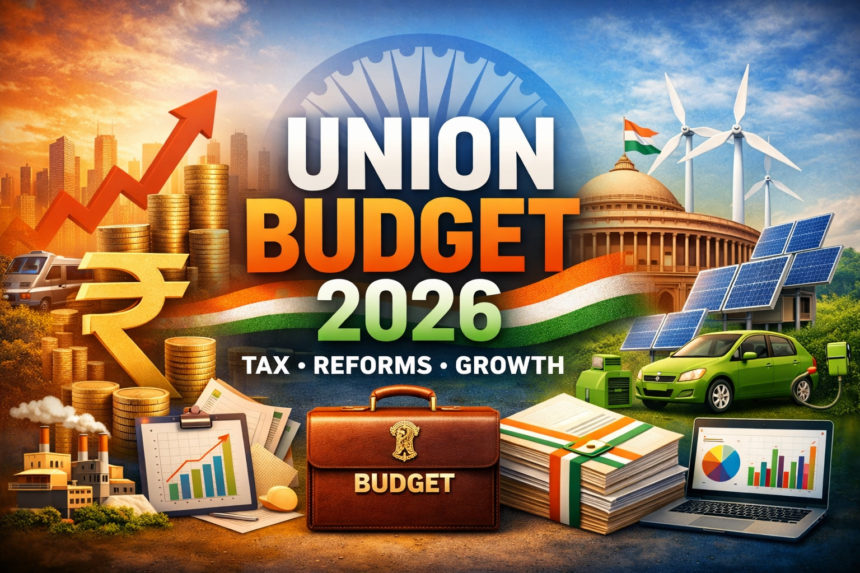
As India moves closer to the presentation of the Union Budget 2026, expectations are steadily building across industries, businesses, and households. With the economy navigating global uncertainties, inflationary pressures, and rapid digital transformation, this year’s budget is widely expected to focus on tax reforms, growth-oriented policies, and long-term structural changes. From the salaried middle class to startups and large enterprises, every segment is keenly watching the government’s next move.
The Union Budget 2026 comes at a crucial juncture for the Indian economy. While India continues to be one of the fastest-growing major economies, challenges such as global slowdown risks, geopolitical tensions, and evolving trade dynamics remain. Domestically, consumption recovery, employment generation, and capital expenditure are key focus areas.
Against this backdrop, policymakers are expected to strike a careful balance between fiscal discipline and growth stimulus. The government’s push toward infrastructure development, manufacturing under “Make in India,” and digital public infrastructure is likely to continue, supported by targeted budgetary allocations.
One of the most discussed aspects of Union Budget 2026 is income tax reform. Salaried individuals and the middle class are hoping for meaningful relief to counter rising living costs.
Key income tax expectations include:
-
Revision of income tax slabs to provide higher disposable income
-
Increase in standard deduction for salaried taxpayers
-
Simplification and wider adoption of the new tax regime
-
Rationalization of surcharge and cess structures
Tax experts believe that boosting take-home pay can significantly enhance consumer spending, which in turn can support economic growth. A simplified tax structure may also encourage better compliance and reduce litigation.
Another major area of discussion ahead of Union Budget 2026 is Goods and Services Tax (GST) reform. While GST has streamlined indirect taxation, industry bodies continue to seek clarity and rationalization.
Expected GST-related measures include:
-
Reduction in tax rates for essential and mass-consumption goods
-
Simplification of GST compliance for MSMEs
-
Faster refunds and improved input tax credit mechanisms
A more efficient GST framework could ease the burden on small businesses and improve India’s overall ease of doing business ranking.
Infrastructure development is expected to remain a cornerstone of the Union Budget 2026. Continued investment in roads, railways, ports, and urban infrastructure is seen as essential for job creation and long-term economic competitiveness.
Likely focus areas include:
-
Increased allocation for transport and logistics
-
Expansion of urban infrastructure and smart cities
-
Continued momentum in railway modernization
-
Support for public-private partnership (PPP) models
Higher capital expenditure not only strengthens economic foundations but also has a multiplier effect across sectors such as steel, cement, and construction.
Micro, Small, and Medium Enterprises (MSMEs) are often described as the backbone of the Indian economy. In Union Budget 2026, expectations are high for enhanced credit access and policy support for this sector.
Possible measures include:
-
Expanded credit guarantee schemes
-
Easier compliance norms and reduced regulatory burden
-
Incentives for technology adoption and digitalization
-
Tax benefits and funding support for startups
With startups driving innovation and employment, targeted incentives could help India strengthen its position as a global innovation hub.
Manufacturing is likely to receive renewed attention in Union Budget 2026. To reduce import dependence and boost exports, the government may enhance existing schemes such as production-linked incentives (PLI).
Key expectations include:
-
Extension and expansion of PLI schemes
-
Incentives for electronics, semiconductors, and green manufacturing
-
Policy support for export-oriented industries
Strengthening domestic manufacturing can improve trade balance, create jobs, and build resilient supply chains.
With climate commitments gaining prominence, Union Budget 2026 is expected to reinforce India’s transition toward a green and sustainable economy.
Anticipated initiatives include:
-
Higher investment in renewable energy projects
-
Incentives for electric vehicles and clean mobility
-
Support for green hydrogen and energy storage technologies
Such measures not only address environmental concerns but also open new avenues for investment and employment.
Digital transformation continues to reshape governance and economic activity. Union Budget 2026 may further strengthen the Digital India vision by investing in emerging technologies.
Expected highlights include:
-
Expansion of digital public infrastructure
-
Support for artificial intelligence, cybersecurity, and fintech
-
Skill development programs aligned with future technologies
Technology-driven reforms can improve service delivery, transparency, and productivity across sectors.
While expectations for tax relief and higher spending are strong, fiscal prudence remains a priority. Analysts anticipate that the government will outline a credible roadmap for fiscal consolidation without compromising growth objectives.
A balanced approach—combining targeted welfare measures, strategic investments, and reform-driven policies—could enhance investor confidence and ensure sustainable development.
The Union Budget 2026 is shaping up to be a high-impact policy document with far-reaching implications. With strong expectations around tax reforms, infrastructure growth, MSME support, and sustainability, the budget has the potential to set the economic tone for the coming years.
As discussions and debates intensify, all eyes are on how the government addresses the aspirations of citizens while steering the economy toward long-term resilience and inclusive growth. Whether it delivers immediate relief or focuses on structural transformation, Union Budget 2026 will undoubtedly play a pivotal role in shaping India’s economic future.