



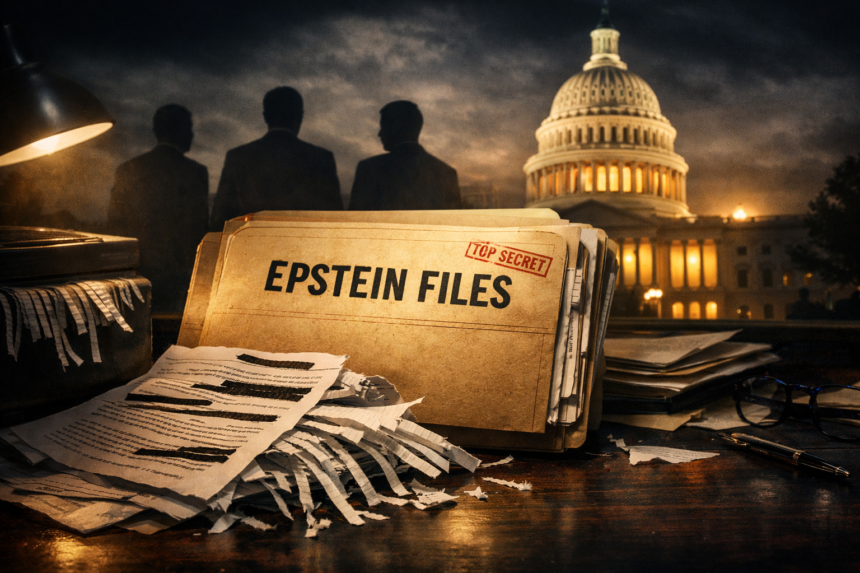
The long-running controversy surrounding the Epstein files has reignited intense political, legal, and public debate in the United States, as lawmakers accuse the Justice Department of mishandling critical documents linked to convicted sex offender Jeffrey Epstein. Fresh allegations of deleted records, missing evidence, and lack of transparency have once again placed the U.S. justice system under scrutiny, raising troubling questions about accountability, power, and institutional trust.
The Epstein files refer to thousands of pages of investigative records, court filings, photographs, flight logs, witness statements, and sealed documents connected to the criminal activities of Jeffrey Epstein. Epstein, a wealthy financier with ties to influential political, business, and academic figures, was arrested in 2019 on federal sex trafficking charges involving underage girls. He died in jail later that year in what authorities ruled a suicide—though skepticism remains widespread.
Despite Epstein’s death, the public has continued to demand the release of all related documents to uncover the full scope of his alleged crimes and identify anyone who may have enabled or protected him.
The current controversy erupted after reports revealed that certain Epstein-related records—particularly digital images and documents—were briefly made public and then removed from official government platforms. Lawmakers claim these deletions occurred without adequate explanation, fueling suspicion that critical evidence may have been intentionally withheld or destroyed.
Two members of Congress have now formally demanded answers from the Department of Justice, accusing senior officials of obstructing transparency. At the center of the storm is U.S. Attorney General Pam Bondi, who faces mounting pressure to explain why the files were removed and whether any internal directives were issued regarding their handling.
Several lawmakers have called for the Justice Department to be held in contempt of Congress if it fails to provide a full account of what happened to the Epstein records. According to officials familiar with the matter, congressional committees are seeking:
-
A complete inventory of all Epstein-related files
-
An explanation for any deletions or redactions
-
Names of officials involved in the decision-making process
-
Assurance that no evidence has been permanently lost
Members of Congress argue that the Epstein case is not just about one individual, but about whether the justice system treats powerful people differently from ordinary citizens.
The U.S. Department of Justice has pushed back against allegations of wrongdoing, stating that some materials were removed temporarily due to privacy concerns, ongoing litigation, or compliance with court orders. Officials insist that no evidence has been destroyed and that all actions were taken in accordance with federal law.
However, critics argue that the explanations lack detail and fail to address why transparency was not prioritized from the outset—especially in a case that has already eroded public confidence in federal institutions.
The Epstein files represent more than just criminal records—they symbolize the broader issue of elite accountability. Epstein’s connections spanned multiple sectors, including politics, finance, academia, and international diplomacy. His private jet flight logs, luxury properties, and relationships with high-profile individuals have fueled persistent speculation about who else may have been involved or complicit.
For victims and advocacy groups, the delayed or incomplete release of information feels like a continuation of systemic failure. Many survivors argue that full disclosure is essential not only for justice but also to prevent similar abuses in the future.
Public reaction has been swift and fierce. Social media platforms are flooded with calls for transparency, trending hashtags, and renewed demands to “release all the files.” Media organizations and investigative journalists have also stepped up pressure, filing Freedom of Information Act (FOIA) requests and publishing timelines highlighting inconsistencies in the government’s handling of the case.
Legal experts warn that continued opacity could further damage trust in the justice system at a time when public confidence is already fragile.
If Congress proceeds with contempt proceedings, the controversy could escalate into a significant constitutional clash between the legislative branch and the executive. Such a move would signal that lawmakers believe the Justice Department is actively obstructing oversight—a rare and serious accusation.
Politically, the issue cuts across party lines. While partisan tensions are evident, transparency advocates from both sides agree that the Epstein case demands exceptional openness due to its scale, sensitivity, and public interest.
For survivors of Epstein’s abuse, the controversy is deeply personal. Many have stated that incomplete disclosure prolongs trauma and denies them closure. Victims’ rights groups are calling for an independent review panel or special prosecutor to ensure the case is handled without political influence.
“These files are not just documents—they are evidence of suffering,” said one advocate. “Every delay feels like another injustice.”
As of now, congressional committees are awaiting further responses from the Justice Department. Additional hearings, subpoenas, and legal challenges are expected in the coming weeks. Meanwhile, public pressure continues to mount, with advocacy groups and citizens demanding full transparency.
The Epstein Files Controversy is far from over. Whether it leads to meaningful accountability or fades into another unresolved scandal may determine how history judges one of the most disturbing criminal cases of the modern era.
The renewed Epstein files controversy underscores a critical truth: justice must not only be done—it must be seen to be done. As lawmakers push for answers and the public demands transparency, the handling of these files will serve as a defining test for the integrity of American institutions. In a democracy, secrecy breeds suspicion, and only full disclosure can begin to restore trust.