

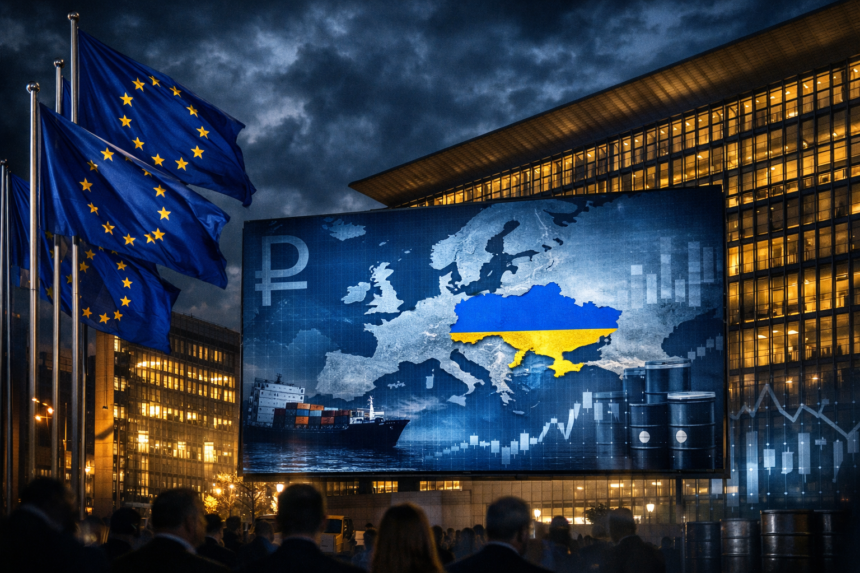
The European Union has officially extended its wide-ranging economic sanctions against Russia, reaffirming its long-term commitment to supporting Ukraine and countering Moscow’s continued aggression. The decision, announced by the EU Council, comes amid persistent geopolitical tensions, stalled peace negotiations, and fresh security concerns across Eastern Europe.
The extension ensures that restrictive measures imposed on Russia will remain in force, signaling that the EU is not prepared to ease pressure until there is a meaningful change in Russia’s actions toward Ukraine.
The sanctions were originally introduced following Russia’s military actions in Ukraine and have since been renewed periodically. According to EU officials, Russia has failed to comply with international law, particularly regarding Ukraine’s sovereignty and territorial integrity.
The ongoing conflict has resulted in significant humanitarian consequences, infrastructure destruction, and regional instability. EU leaders argue that lifting sanctions prematurely would undermine diplomatic efforts and weaken accountability.
The decision to extend sanctions was taken unanimously by EU member states, reflecting a continued consensus on the bloc’s Russia policy despite economic pressures within Europe itself.
The extended sanctions package continues to target key sectors of the Russian economy, including:
-
Energy exports, particularly oil and gas
-
Financial institutions, restricting access to EU capital markets
-
Defense and dual-use technologies
-
Trade limitations on strategic goods
-
Asset freezes and travel bans on Russian individuals and entities
These measures are designed to reduce Russia’s ability to finance military operations and access advanced technologies.
While the sanctions have also affected European economies—especially energy-dependent nations—the EU maintains that long-term security outweighs short-term economic costs.
Since the sanctions were first imposed, Russia’s economy has faced mounting challenges. Restrictions on banking and trade have complicated international transactions, while export limitations have reduced revenue from European markets.
Although Russia has sought to diversify trade partnerships and increase domestic production, analysts note that technology gaps, inflation, and reduced foreign investment continue to strain the economy.
The EU believes sustained pressure remains one of the few effective non-military tools available to influence Russia’s behavior.
The sanctions extension is closely tied to the EU’s unwavering support for Ukraine. EU leaders reiterated that any reconsideration of sanctions would depend on tangible progress toward peace and respect for Ukraine’s internationally recognized borders.
Since the start of the conflict, the EU has provided Ukraine with:
-
Financial assistance
-
Humanitarian aid
-
Military and defense support
-
Refugee assistance programs
The sanctions are seen as part of a broader strategy to defend European security and international norms.
The sanctions decision comes amid heightened security concerns, including reports of attacks, intelligence warnings, and diplomatic stand-offs involving Russia. Recent incidents have further complicated diplomatic efforts and reinforced EU leaders’ belief that easing restrictions now would be premature.
At the same time, EU officials continue to emphasize that sanctions are not aimed at Russian citizens, but rather at influencing state policy and leadership decisions.
While the sanctions extension passed unanimously, internal debates persist. Some EU member states face domestic pressure due to rising energy costs and economic slowdown. Businesses in sectors like manufacturing and agriculture have also voiced concerns over prolonged trade disruptions.
Despite these challenges, EU leadership maintains that unity is essential. Officials argue that fragmenting sanctions policy would weaken Europe’s credibility and embolden further violations of international law.
The EU’s decision has global implications, influencing international markets, diplomatic relations, and geopolitical alignments. The move reinforces cooperation between the EU, the United States, and other allies while also shaping how neutral or non-aligned countries position themselves.
Sanctions on Russia have contributed to shifts in global energy flows, commodity prices, and supply chains—effects felt well beyond Europe.
The sanctions are expected to remain in place until at least the next formal review period. EU officials have stated that they will continue monitoring developments closely and remain open to diplomatic solutions—provided Russia demonstrates genuine commitment to peace.
Until then, the EU is preparing for prolonged economic and political pressure, emphasizing resilience, diversification, and strategic autonomy.
By extending economic sanctions against Russia, the EU has once again demonstrated its determination to uphold international law and support Ukraine amid one of Europe’s most significant security crises in decades. While the path forward remains uncertain, the decision underscores a clear message: the EU will not compromise on sovereignty, security, or its core values.