

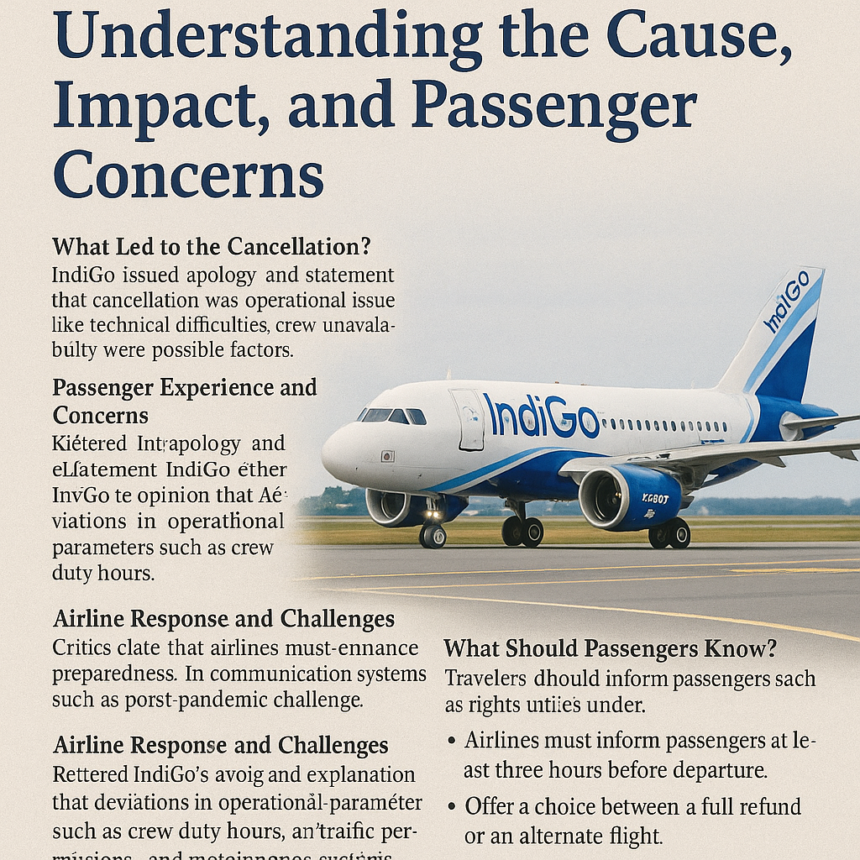
Flight disruptions are never pleasant, especially when hundreds of passengers rely on airlines for timely travel. One such incident that drew widespread attention was the recent cancellation of an IndiGo flight, which left travelers frustrated and demanding clearer communication from the airline. As India’s largest carrier in terms of market share, IndiGo handles thousands of flights every day, and even a single cancellation affects a long chain of schedules, connections, and personal plans. The incident has sparked conversations about airline accountability, operational challenges, and the rights of passengers during unexpected disruptions.
What Led to the Cancellation?
According to initial statements, the cancellation was caused by a combination of operational issues, including possible technical difficulties and crew unavailability. In aviation, any technical fault—major or minor—must be addressed before departure to ensure passenger safety. While safety is the top priority for all airlines, such technical inspections often lead to delays or cancellations, especially when backup aircraft or alternate crew are not immediately available.
IndiGo has not provided detailed public clarification on the exact nature of the issue, which has contributed to passengers expressing dissatisfaction online. Many travelers took to social media to share videos and photos of long queues, lack of communication, and confusion among passengers about the next steps. In today’s digital age, even a small communication delay can escalate into large-scale criticism.
Passenger Experience and Concerns
For many passengers, the biggest issue was not the cancellation itself—but the way information was communicated. Several travelers claimed that they were only informed of the cancellation shortly before departure. Such last-minute notifications can be stressful, especially for those traveling for medical reasons, urgent business meetings, or pre-scheduled events.
Passengers also reported difficulties in receiving alternate arrangements or refunds. While airlines are obligated to offer options like rebooking on the next available flight or issuing a full refund, the process can be slow when cancellations occur unexpectedly. Long waiting times at customer service counters and overloaded helplines added to the frustration.
In major airports, sudden cancellations can quickly lead to overcrowding. This incident highlighted the need for improved coordination between ground staff, communication teams, and digital systems to ensure travelers are informed promptly and guided efficiently.
Airline Response and Challenges
IndiGo issued an apology and stated that the cancellation was unavoidable due to operational safety requirements. As aviation runs on strict protocols, crew duty hours, air traffic permissions, and maintenance checks all play critical roles in determining whether a flight can depart. Even a small deviation in these operational parameters can ground an aircraft.
However, critics argue that airlines must improve preparedness by having alternative crew members, better scheduling buffers, and more transparent communication systems. As travel demand continues to rise post-pandemic, operational stress on airlines is increasing. Ensuring reliability while maintaining safety standards remains a major challenge.
Impact on the Aviation Industry
The IndiGo cancellation incident once again raises broader questions about how Indian aviation handles disruptions. The industry has been facing challenges such as:
-
Shortage of trained crew due to rising flight frequency
-
Weather unpredictability, especially during monsoons and winters
-
Technical issues related to ageing aircraft
-
Increasing passenger expectations for real-time information
While flight cancellations are unavoidable in any airline, the way they are managed influences public trust. In an industry where competition is rising, maintaining a strong reputation for punctuality and reliability is essential.
What Should Passengers Know?
Travelers should be aware of their rights under India’s Directorate General of Civil Aviation (DGCA) regulations. In case of cancellations:
-
Airlines must inform passengers at least three hours before departure.
-
They must offer a choice between a full refund or an alternate flight.
-
In certain situations, passengers may be entitled to compensation.
Understanding these rules helps travelers make informed decisions and avoid unnecessary inconvenience.
Conclusion
The IndiGo plane cancellation incident serves as a reminder that even leading airlines are vulnerable to operational complexities. While safety remains the non-negotiable priority, communication and customer service are equally important to ensure passenger satisfaction. As the aviation industry continues to grow, airlines like IndiGo must invest more in transparency, contingency planning, and customer experience.
For now, passengers hope that incidents like this will lead to meaningful improvements, ensuring smoother and more reliable travel in the future.