



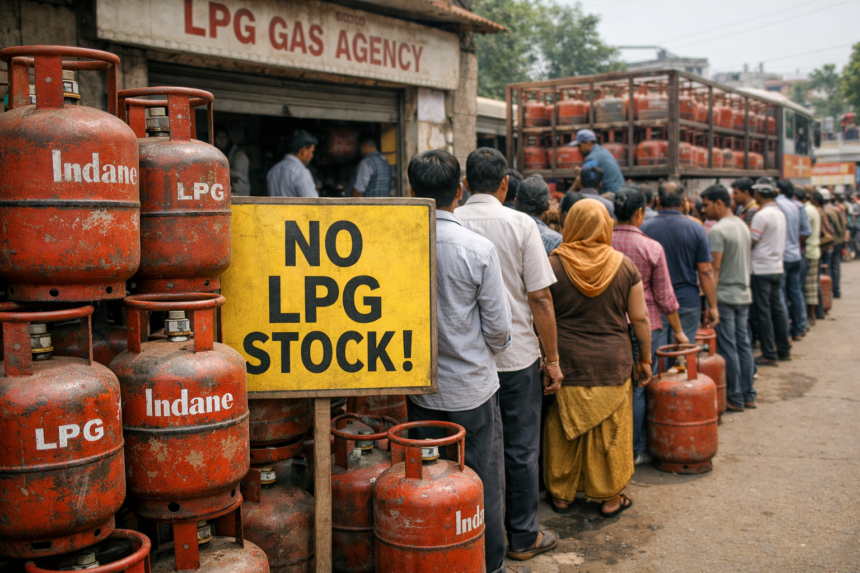
Liquefied Petroleum Gas (LPG) has become one of the most important cooking fuels for households across India. Over the last decade, millions of families shifted from traditional fuels like firewood and coal to LPG because it is cleaner, faster, and safer for cooking. However, in recent times many areas have started experiencing shortages of LPG cylinders. The problem has created difficulties for families, small businesses, and gas distributors, raising concerns about the stability of the supply system.
Increasing Complaints from Consumers
In several cities and towns, people have reported delays in the delivery of LPG cylinders even after booking them. Normally, a cylinder is delivered within a few days, but due to the shortage many customers have had to wait much longer. Some people have even visited gas agencies personally to check on their bookings.
Long waiting times have created inconvenience for families who depend entirely on LPG for cooking their daily meals. When a cylinder runs out and the replacement does not arrive on time, households are forced to find alternative solutions such as using electric stoves or borrowing cylinders from neighbors.
Reasons Behind the Shortage
One of the main reasons for the LPG shortage is the disruption in global fuel supply. India imports a large portion of its LPG from other countries. When there are international conflicts, shipping problems, or changes in global fuel prices, it directly affects the availability of LPG in the country.
Another reason is the sudden increase in demand. During periods of uncertainty or when news about a possible shortage spreads, many people book cylinders earlier than usual. This creates extra pressure on the supply chain and leads to temporary shortages in some regions.
Logistical challenges also play a major role. LPG cylinders go through several stages before reaching consumers. Gas is produced or imported, transported to refineries, filled into cylinders at bottling plants, and then delivered by distributors. Any delay or disruption at one stage can slow down the entire system.
In some cases, maintenance work at refineries or technical issues at bottling plants can reduce production for a short period. Transport problems, strikes by truck drivers, or bad weather conditions may also delay the movement of cylinders from plants to distribution centers.
Impact on Daily Life
The shortage of LPG cylinders has affected the daily routines of many families. Cooking is an essential part of household life, and without LPG it becomes difficult to prepare meals on time. Working families and students often depend on quick cooking, and delays in cylinder delivery can create stress and inconvenience.
Small food businesses such as roadside stalls, restaurants, and catering services also depend heavily on LPG. When they do not receive cylinders on time, their operations slow down. Some vendors are forced to reduce their menu items or temporarily stop cooking certain dishes.
The shortage can also lead to illegal practices such as black marketing. In some places, cylinders are sold at higher prices in unofficial markets. This puts additional financial pressure on ordinary consumers who already struggle with rising fuel prices.
Government and Company Response
To handle the situation, oil companies and government authorities usually take steps to stabilize supply. They try to increase LPG imports and improve distribution so that cylinders reach consumers more quickly.
Authorities often advise people not to panic or book cylinders unnecessarily. When customers book only when needed, the supply system can work more smoothly. Some governments also introduce temporary rules, such as increasing the minimum gap between bookings, to prevent excessive demand.
Monitoring of distributors is also increased during shortages. Officials keep an eye on gas agencies to ensure that cylinders are distributed fairly and not diverted to the black market.
Importance of Alternative Solutions
The LPG shortage has also highlighted the need for alternative cooking solutions. Electric induction stoves, solar cookers, and biogas systems are some options that can reduce dependence on LPG. Many households already use induction cooktops as a backup when their cylinder runs out.
Encouraging the use of multiple energy sources can help families avoid difficulties during supply disruptions. At the same time, improving domestic LPG production and storage capacity can strengthen the country’s long-term energy security.
Conclusion
The shortage of LPG cylinders has become a serious issue for many households and businesses. The problem is mainly caused by supply disruptions, rising demand, and logistical challenges in the distribution network. While authorities are working to improve the situation, the crisis highlights the need for better planning and stronger energy infrastructure.
Ensuring a stable supply of LPG is essential because it directly affects the daily lives of millions of people. With improved supply management, responsible consumer behavior, and the adoption of alternative cooking technologies, the impact of such shortages can be reduced in the future.