


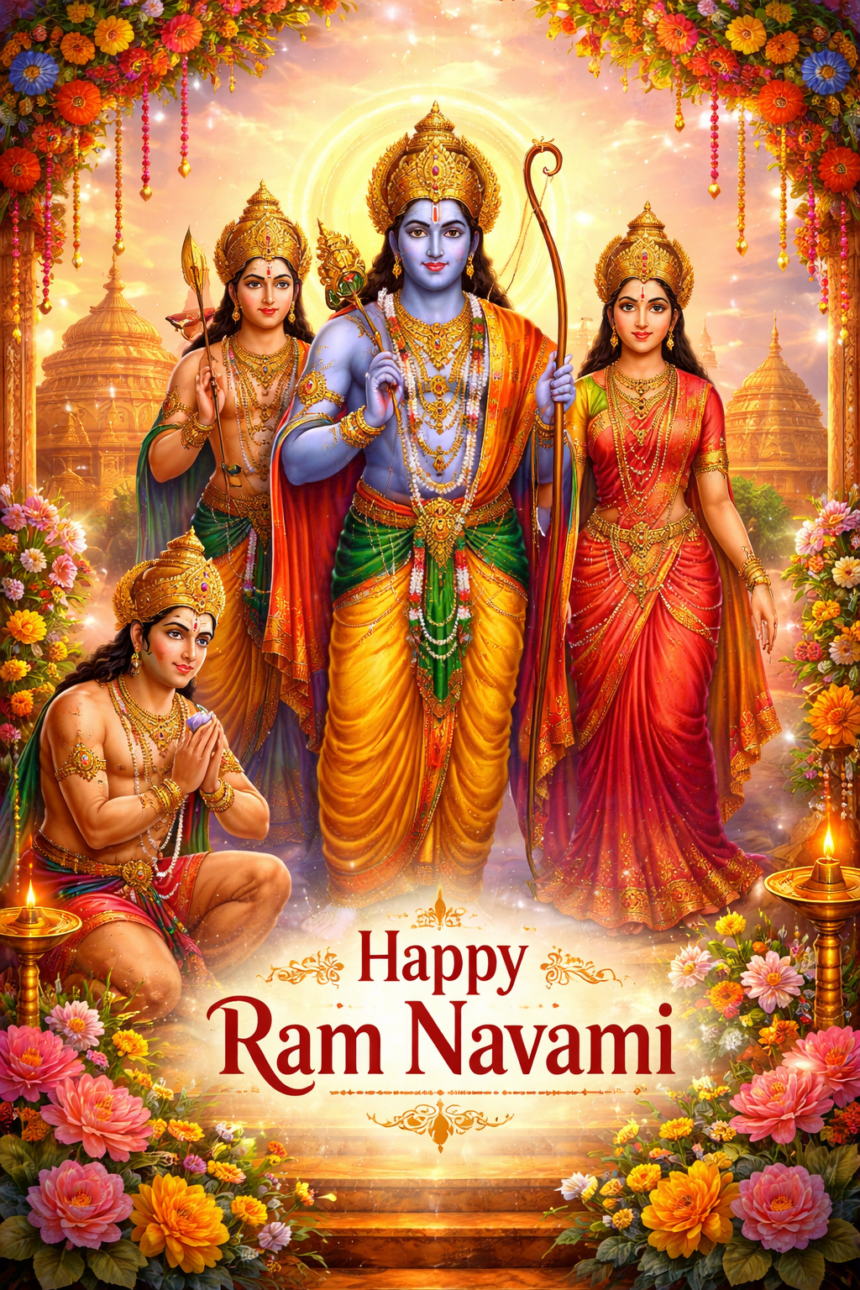
Ram Navami is one of the most significant festivals in Hinduism, observed with great devotion and enthusiasm across India and by Hindu communities worldwide. This auspicious occasion marks the birth anniversary of Rama, the seventh incarnation of Vishnu, who is revered as the symbol of righteousness, virtue, and ideal leadership.
Ram Navami falls on the ninth day (Navami) of the Chaitra month in the Hindu lunar calendar, which typically corresponds to March or April in the Gregorian calendar. It also marks the culmination of the nine-day festival of Chaitra Navratri, dedicated to the worship of Goddess Durga. On this day, devotees celebrate not just the birth of Lord Rama but also his values and teachings that continue to guide humanity.
According to the ancient epic Ramayana, Lord Rama was born in the city of Ayodhya to King Dasharatha and Queen Kaushalya. His birth was considered divine, meant to restore dharma (righteousness) and eliminate evil from the world. The Ramayana narrates the life journey of Rama, his exile to the forest, the abduction of his wife Sita by Ravana, and the ultimate victory of good over evil.
Ram Navami celebrations vary across regions but share a common spirit of devotion and joy. Devotees wake up early, take a holy bath, and visit temples dedicated to Lord Rama. Special prayers, bhajans (devotional songs), and recitations of the Ramayana are organized. In many temples, the moment of Rama’s birth at noon is celebrated with great enthusiasm, accompanied by the ringing of bells and chanting of mantras.
Fasting is a common practice during Ram Navami. Many devotees observe a day-long fast, consuming only fruits and milk, while others follow strict dietary restrictions. The fast is seen as a way to purify the body and mind, allowing devotees to connect more deeply with the divine.
One of the most vibrant aspects of Ram Navami is the organization of processions known as “Shobha Yatras.” These processions often feature beautifully decorated idols of Lord Rama, along with his companions Lakshmana and Hanuman. Devotees sing devotional songs, dance, and distribute prasad (holy offerings) among the public. In cities like Ayodhya, the celebrations are especially grand, attracting thousands of pilgrims.
In South India, particularly in states like Tamil Nadu and Karnataka, Ram Navami is celebrated with the ceremonial wedding of Rama and Sita, symbolizing their divine union. In Maharashtra, devotees organize community feasts and chant the name of Lord Rama throughout the day. Meanwhile, in Eastern India, especially Odisha, the festival is observed with temple rituals, bhajans, and cultural programs.
Beyond rituals and celebrations, Ram Navami carries a deeper spiritual and moral significance. Lord Rama is often referred to as “Maryada Purushottam,” meaning the ideal man. His life exemplifies qualities such as truthfulness, courage, compassion, and devotion to duty. In today’s fast-paced world, his teachings remind people of the importance of ethical living and maintaining harmony in society.
The festival also promotes unity and social harmony. People from different communities come together to celebrate, share food, and participate in cultural activities. It serves as a reminder that the victory of good over evil is universal and timeless.
In recent years, Ram Navami has also gained prominence in digital spaces, with online celebrations, live temple darshans, and virtual bhajan sessions allowing people to participate from anywhere in the world. This has helped preserve traditions while adapting to modern lifestyles.
In conclusion, Ram Navami is not just a religious festival but a celebration of values that define humanity. It honors the birth of Lord Rama and inspires people to follow the path of righteousness, truth, and compassion. As devotees chant “Jai Shri Ram,” the festival fills hearts with hope, devotion, and a renewed commitment to living a virtuous life.