
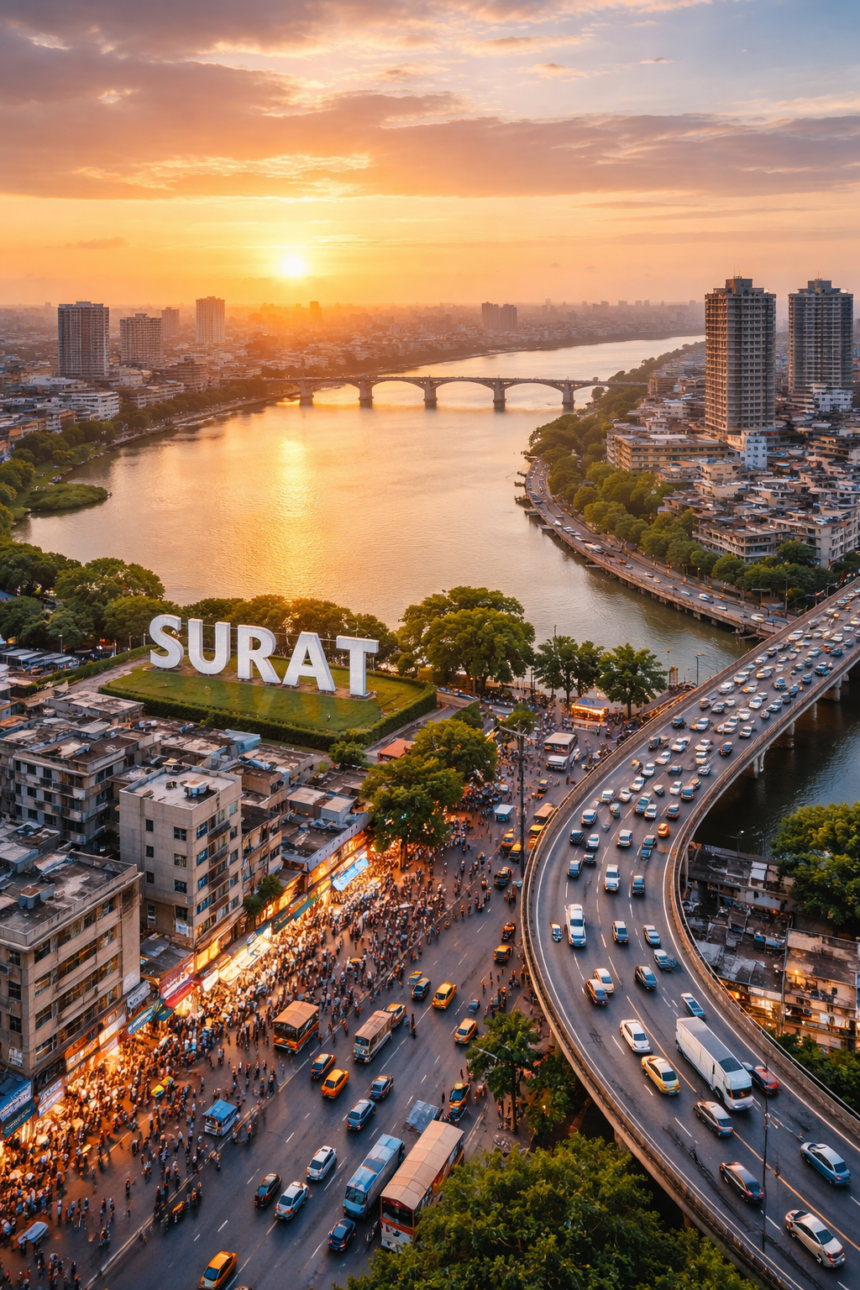
Surat, one of Gujarat’s fastest-growing cities, continues to remain in the spotlight due to its rapid urban development, industrial strength, and evolving social landscape. Known as the “Diamond City of India” and a major textile hub, Surat has recently witnessed a mix of progress and challenges that are shaping the lives of its residents.
One of the most significant aspects of Surat’s current situation is its economic resilience. The city plays a crucial role in India’s diamond polishing and textile industries. Even amid global economic uncertainties, Surat’s diamond sector has shown signs of recovery after facing slowdowns due to reduced international demand. Textile markets, especially synthetic fabrics, have also picked up momentum, boosting local employment and trade. This economic activity has reinforced Surat’s position as a key contributor to Gujarat’s GDP.
However, rapid industrial growth has also brought certain challenges. Environmental concerns have become a major topic of discussion in recent times. Industrial waste, air pollution, and water contamination in certain areas have raised alarms among citizens and environmentalists. The local authorities have been under pressure to enforce stricter regulations and ensure sustainable industrial practices. While efforts have been made to improve waste management systems and monitor pollution levels, many residents feel that more stringent actions are required.
Another pressing issue in Surat is urban infrastructure. The city has experienced a massive influx of migrant workers from different parts of India, particularly from states like Uttar Pradesh, Bihar, and Odisha. This population growth has increased the demand for housing, transportation, and basic civic amenities. Although Surat is known for its relatively well-planned roads and cleanliness compared to many Indian cities, some areas are now facing congestion, water supply issues, and pressure on public services.
Flooding remains a recurring concern in Surat, especially during the monsoon season. The city’s proximity to the Tapi River makes it vulnerable to waterlogging and floods when heavy rains coincide with water release from the Ukai Dam. In recent times, authorities have worked on improving drainage systems and early warning mechanisms. Despite these efforts, citizens continue to worry about the effectiveness of these measures during extreme weather conditions.
Public health is another area that has drawn attention. Surat has previously been in the news for outbreaks of diseases like dengue and viral infections, particularly during seasonal changes. Recently, health officials have been focusing on preventive measures, including awareness campaigns and sanitation drives. Hospitals and healthcare centers have also been strengthened to handle potential outbreaks. However, maintaining consistent public hygiene remains a challenge due to the city’s dense population.
On the social front, Surat has largely maintained its reputation as a peaceful and business-friendly city. However, like many rapidly growing urban centers, it has also witnessed occasional incidents related to labor disputes and minor law-and-order issues. Authorities have been proactive in managing such situations, ensuring that industrial harmony is maintained and disruptions are minimized.
The city’s administration has also been focusing on smart city initiatives. Surat has been recognized as one of India’s leading smart cities, with projects aimed at improving digital infrastructure, surveillance, and public services. The introduction of intelligent traffic systems, waste-to-energy projects, and improved public transport options are part of this transformation. These initiatives are expected to enhance the quality of life for residents in the long run.
In addition, Surat’s real estate sector has seen steady growth. With increasing demand for residential and commercial spaces, new housing projects and business complexes are being developed across the city. This has attracted investors and boosted the construction industry. However, rising property prices have also made affordability a concern for middle- and lower-income groups.
Despite these challenges, Surat continues to demonstrate resilience and adaptability. The city’s entrepreneurial spirit, combined with government initiatives and community participation, plays a crucial role in addressing ongoing issues. Citizens are becoming more aware of environmental sustainability, public health, and civic responsibilities, which is a positive sign for the future.
In conclusion, the recent situation in Surat reflects a city in transition—balancing rapid economic growth with the need for sustainable development and improved quality of life. While challenges such as pollution, infrastructure strain, and public health concerns persist, ongoing efforts by authorities and the community provide hope for a more balanced and prosperous future. Surat’s journey serves as an example of how urban centers in India are evolving in response to modern demands while striving to maintain their unique identity