


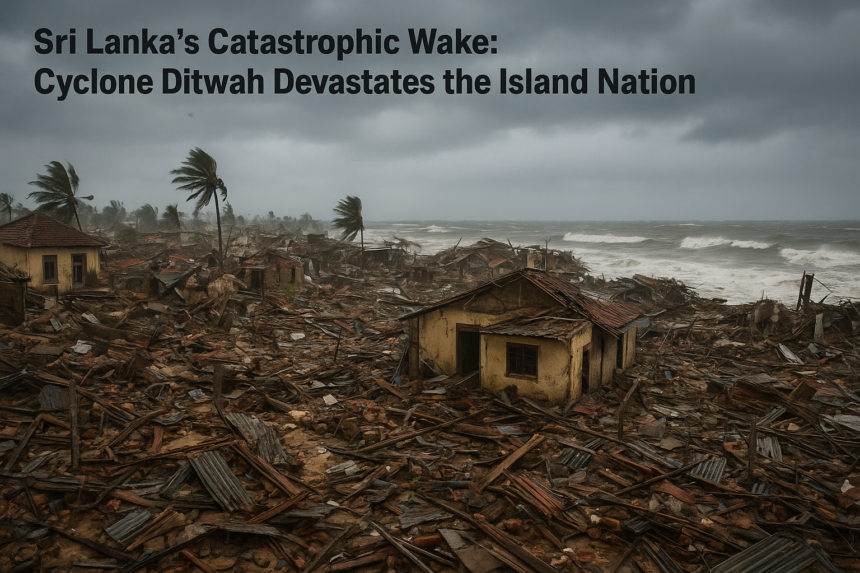
As of December 4, 2025, Sri Lanka grapples with the aftermath of Cyclone Ditwah, a ferocious storm that has etched itself into the nation’s history as its deadliest natural disaster in decades. Striking on November 28, the cyclone unleashed torrential rains, gale-force winds, and unprecedented flooding across all 25 districts, submerging entire communities and triggering landslides that buried villages in the central highlands. What began as a routine tropical depression morphed into a monster, part of a broader weather cluster that also battered Indonesia, Thailand, and Malaysia, claiming over 1,140 lives region-wide. In Sri Lanka alone, the official death toll has surged to 480, with more than 400 people still missing, according to the latest updates from the Disaster Management Centre.
President Anura Kumara Dissanayake, who assumed office amid the country’s lingering economic woes, declared a nationwide state of emergency on November 30—the first since the 2022 economic collapse. In a somber national address, he described the event as “the largest and most challenging natural disaster in our history,” eclipsing even the 2004 Indian Ocean tsunami that killed over 35,000 Sri Lankans. “We have to rebuild from scratch,” Dissanayake urged, vowing to prioritize recovery while warning of more heavy rains forecast for the coming days. The cyclone’s path cut through the heart of the island, from the tea plantations of Nuwara Eliya to the urban sprawl of Colombo, where floodwaters turned bustling streets into rivers of debris.
The human toll is staggering. Over 1.2 million people have been displaced, crammed into makeshift shelters in schools and temples, while rescuers in rubber dinghies navigate chest-deep waters to reach stranded families. In Badulla district, 71 deaths were confirmed, with 53 more unaccounted for after a landslide razed a hillside village, swallowing homes and a primary school mid-lesson. Eyewitness accounts paint a harrowing picture: “Everything is underwater,” said one resident of Peliyagoda, wading through sludge to salvage sodden photographs from her ruined home. In Colombo’s suburbs, like Biyagama and Sedawatta, entire neighborhoods remain cut off, with power outages persisting and communication lines severed. Tragically, the crisis claimed an Air Force helicopter pilot on December 1 during a rescue mission in Lunuwila, north of the capital, highlighting the perilous conditions faced by first responders.
Infrastructure damage exacerbates the chaos. Roads and bridges, vital for aid distribution, lie buried under mudslides, while the Kelani River’s overflow has inundated key highways. The port of Colombo, a lifeline for imports, operates at half capacity, delaying shipments of fuel and medicine. Schools and hospitals in the central province are shuttered, with the World Health Organization (WHO) reporting risks of disease outbreaks in overcrowded camps. Satellite imagery from The Hindu reveals the extent of devastation in Colombo: once-vibrant green suburbs now appear as vast brown swathes of silt, with uprooted trees and crumpled rooftops dotting the landscape.
Economically, Sri Lanka—still nursing wounds from its 2022 bankruptcy—faces a potential $2 billion hit, per preliminary government estimates. The cyclone ravaged tea estates, a cornerstone export earning $1.3 billion annually, destroying 20% of the crop in the highlands. Tourism, tentatively rebounding with 2 million visitors this year, could plummet as beaches in the south, though spared the worst, suffer from eroded access roads. The Colombo Stock Exchange, after a panic sell-off on December 1, rebounded 1% on Tuesday to close at 22,241 points, buoyed by investor hopes for swift international bailouts. Yet, inflation, already at 5%, may spike as food prices soar amid supply disruptions.
Amid the rubble, glimmers of solidarity emerge. The international community has rallied, with India leading the charge: Prime Minister Narendra Modi’s government dispatched 10 National Disaster Response Force (NDRF) teams, conducting door-to-door evacuations along the Kelani River. High Commissioner Santosh Jha personally oversaw operations in Sedawatta, distributing essentials like rice and water purifiers. The UK pledged £675,000 ($890,000) in humanitarian aid on December 2, handed over to Foreign Minister Vijitha Herath, while Australia announced $2.5 million on December 4 for victim support. China, a key Belt and Road partner, sent rescue teams and supplies, with state media emphasizing “unwavering solidarity.” The WHO unlocked $175,000 in emergency funds for health services, and the UN Secretary-General António Guterres affirmed readiness to assist.
Not all aid has been seamless. A controversy erupted over Pakistan’s relief shipment, with social media ablaze after reports—later deleted from official X posts—alleged expired food items arrived in Colombo, sparking public outrage and memes mocking the gesture. Pakistan’s elite rescue team landed on December 3, but the diplomatic faux pas overshadowed Islamabad’s $10 million pledge. Domestically, the Sri Lanka Overseas Chinese Association donated Rs. 1 million, and community drives in Kandy and Nuwara Eliya collected clothes and blankets.
Critics, including the Centre for Policy Alternatives, caution against the emergency declaration’s overreach, arguing it sidesteps the robust Disaster Management Act of 2005 and risks curbing civil liberties. “Limit these powers to relief only,” they urged in a December 4 statement, echoing calls for transparency in fund allocation. As receding waters reveal the full scope of loss, questions linger: How will a debt-laden nation fund reconstruction? Can climate-vulnerable Sri Lanka adapt to intensifying storms, linked by experts to global warming?
On December 4, as dawn broke over a sodden capital, volunteers distributed hot meals in Pettah market, a symbol of resilience. “We’ve survived worse,” one elder remarked, invoking the tsunami’s scars. Yet, with forecasts predicting isolated showers, the road to recovery stretches long. President Dissanayake’s administration, elected on promises of systemic change, now faces its sternest test. For Sri Lanka’s 22 million souls, Cyclone Ditwah is not just a storm—it’s a reckoning, demanding unity to rise from the deluge.