



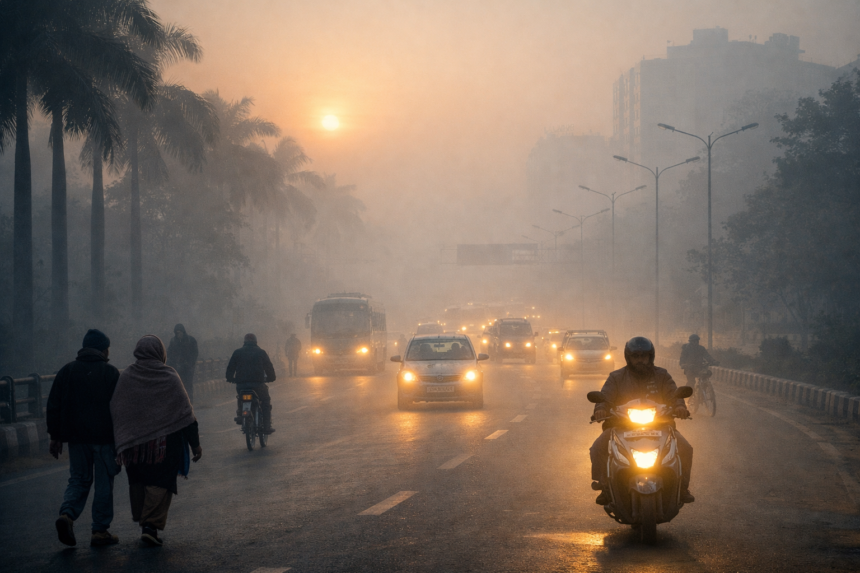
Winter has firmly settled across Odisha, bringing a noticeable drop in temperatures, dense morning fog, and significant changes in daily life. From the coastal plains to the western districts, residents are experiencing one of the chilliest winter phases in recent weeks. According to weather officials, the current conditions are expected to persist, with cold nights and foggy mornings becoming the norm through the end of December and early January.
Several parts of Odisha have recorded temperatures well below the seasonal average. Western and interior districts such as Phulbani, Koraput, Sundargarh, and Kandhamal have experienced particularly cold nights, with minimum temperatures dipping close to single digits. Even coastal cities, which usually enjoy milder winters, are feeling the chill this year.
In the capital city of Bhubaneswar, early morning temperatures have dropped significantly, accompanied by thick fog that reduces visibility on major roads. Residents are stepping out wrapped in warm clothing, a sight that is becoming increasingly common during morning hours.
Similarly, Cuttack and Puri have witnessed colder-than-usual mornings, marking a sharp contrast to Odisha’s typically humid coastal climate.
One of the most visible impacts of winter in Odisha this year is dense fog, especially during early morning hours. Fog has affected road traffic across national highways and city roads, increasing the risk of accidents. Commuters are advised to use fog lights and drive cautiously as visibility in some areas has dropped drastically.
Rail and air travel have also been impacted. Flights operating from Biju Patnaik International Airport have reported minor delays due to poor visibility during early hours. Indian Railways has issued advisories urging passengers to expect possible delays in train schedules during foggy mornings.
The India Meteorological Department (India Meteorological Department) has attributed the fog formation to high moisture levels combined with calm wind conditions and falling night temperatures.
According to the IMD, Odisha is currently under the influence of cold north-westerly winds from the mainland, leading to a steady fall in minimum temperatures. Meteorologists have indicated that no major rainfall activity is expected, allowing cold and dry conditions to prevail.
Weather experts predict that the cold wave conditions may intensify in western Odisha districts, while coastal areas will continue to experience foggy mornings and cool nights. Daytime temperatures are expected to remain pleasant, making afternoons relatively comfortable compared to the chilly mornings and evenings.
Doctors and health experts across Odisha have advised residents to take precautions against winter-related illnesses. Cases of common cold, cough, asthma-related complications, and joint pain have shown a gradual increase during the colder weeks.
Senior citizens and children are particularly vulnerable during this season. Health officials recommend staying warm, avoiding early morning exposure to cold air, and maintaining proper hydration. Hospitals have also advised people with respiratory issues to take extra care during foggy conditions.
The state health department has urged citizens to seek medical attention promptly if symptoms worsen, especially in rural areas where temperatures are significantly lower.
Winter plays a crucial role in Odisha’s agricultural cycle. The cold weather has both positive and challenging effects on farming communities. Rabi crops such as vegetables, pulses, and oilseeds benefit from cooler temperatures, leading to better yields in many regions.
However, farmers in frost-prone pockets of interior Odisha remain cautious, as sudden temperature drops can damage sensitive crops. Agricultural experts have advised farmers to use protective irrigation methods and cover crops where necessary to minimize losses.
In rural areas, winter evenings are marked by traditional gatherings around firewood for warmth, reflecting Odisha’s age-old seasonal lifestyle.
Winter is considered one of the best seasons for tourism in Odisha. With pleasant daytime weather, tourists are flocking to destinations such as Konark, Puri, Chilika Lake, and tribal regions of southern Odisha.
Beach destinations are witnessing increased footfall as travelers prefer winter months for sightseeing, cultural tours, and festivals. Hotels and tour operators report a steady rise in bookings, especially ahead of the New Year celebrations.
The Odisha Tourism Department has encouraged visitors to explore eco-tourism and heritage sites, emphasizing that winter offers the most comfortable climate for travel within the state.
Winter in Odisha is also a season of festivals and cultural celebrations. Events like Dhanu Yatra preparations, Christmas celebrations, and local fairs add vibrancy to the otherwise calm winter evenings. Markets are bustling with winter-specific foods, including traditional snacks and seasonal vegetables.
Street vendors selling hot tea, coffee, and local delicacies have become a common sight across towns and cities, adding warmth to the chilly atmosphere.
As winter deepens its presence in Odisha, the state is experiencing a unique blend of cold waves, foggy mornings, and pleasant afternoons. While the season brings certain challenges in terms of health, travel, and agriculture, it also enhances tourism, cultural activities, and rural traditions.
With the India Meteorological Department predicting continued cold conditions in the coming days, residents are advised to stay informed, take necessary precautions, and embrace the winter season responsibly. Winter in Odisha, though brief compared to northern India, continues to leave a strong impression on daily life across the state.